The other day, I was talking to my son about being kind to himself and his sister. Naturally, sibling rivalry kicked in and he asked if his sister was being kind too. I said, “Yes, she is, because she is growing in her gifts.”
That caught his attention. “What are her gifts?” he asked. I explained them to him, then turned the question back to him: “Do you know what your gifts are?”
He quickly replied, “Math!” I smiled and said, “You like math, but that’s not necessarily your gift.” Then, with a grin, he said, “Genius.” (Trust my son to think his gift is being a genius!) Who knows, maybe he’s right.
I told him, “One of your gifts is communication. You have the ability to take complex things and make them simple.” That’s a gift many overlook. Some people take simple ideas and make them complicated; others make the complicated clear. Gifts show up in different ways.
But the question remains for all of us: Do we know our gifts?
Gifts vs. Education: Which Comes First?
I had already earned a PhD when God revealed to me that one of my gifts was writing. I’d been writing since I was a child, long before I entered school. My mother, also a skilled writer with beautiful cursive, first taught me.
For me, writing is transformational, it carries layers of meaning. Each time I read something I’ve written, I gain a deeper understanding. I never studied writing formally; I just wrote. But I was refining the skill for years at school and work and even in my free time. Do birds go to school to learn how to fly? No, they simply fly.
Still, that doesn’t mean we are adept in our gifting. Gifts must be developed. Education can sharpen a gift, but education without the awareness of our true gift can lead to what I call “bad success”—achievements that look good but fall outside of God’s will. True success comes when we use our gifts, strengths, natural abilities, personality, and experiences in a way that pleases God.
Recognizing Our Natural Abilities
When I was a teenager, I struggled with anxiety. I would write my emotions and look up the scriptures corresponding to my feelings and emotions that was written in the back of my Bible. Reading, meditating, and writing helped me regulate my emotions.
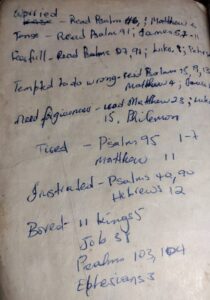
I didn’t realize it then, but I was developing emotional intelligence a natural ability that later became a strength. I see the same sensitivity in my children today, but now they have words for their emotions. Natural abilities often start small and unnoticed, but with development, they become tools for success.
What Do People Come to You For?
Sometimes our abilities show up in what others notice about us. As a teenager, I would design outfits and give them to my aunt to sew. Later, I realized that people often approached me for advice—even strangers at the store. I didn’t recognize it at the time, but this was a thread pointing to a natural ability.
Skills We Acquire
Skills differ from gifts, but they’re just as important. My years studying science taught me how to ask questions. Asking the right questions is a skill that helps me get to the root of problems. Lawyers, teachers, and coaches use this skill daily. Skills sharpen our ability to use our gifts effectively.
How Life Shapes Us
Life itself is one of our greatest teachers. Over the past five years, people have assumed I was a psychologist, a theologian, or a life coach. Companies offered me positions as a physicist, lawyer, and AI consultant. Yet my true dream has always been to motivate and inspire through speaking and writing.
Even with a PhD in biochemistry, no one has asked me about biochemistry. God closed that door. It was a reminder that our true identity and calling aren’t defined by degrees or certificates.
Passions and Strengths
Pay attention to what you love doing daily. These are your passions. During my PhD studies, I craved growth and began watching leadership talks by John Maxwell, T.D. Jakes, and Myles Munroe. Their teachings fueled my passion for leadership and personal development. But it was my encounter with Jesus that gave me the revelation of who I am.
Strengths, on the other hand, are how we express those passions. Writing became my strength. In moments of loss and uncertainty, I turned to prayer and writing. My words opened doors from serving as a deacon to consulting on AI projects. Passion plus strength builds momentum toward purpose.
What about our spiritual gifts?
I am a learned person, I read lots of books and I am educated. Also, I am exposed because I have travelled to a number of countries, however I still craved wisdom, knowledge, and understanding, it is why I pursued a PhD. A PhD did not give what I was searching for, I gained some insight, but the knowledge, wisdom and understanding I now have is a gift from the Holy Spirit.
As a believer we get the Holy Spirit when we first believed, we need to make sure we do not grieve Him. The holy spirit gives us gifts specific to the call on our lives. Each of us have a unique blend of gifts, talents, strengths, passions, and experiences that is specific to where we should serve (the call on our lives). We need to ask God to reveal this to us individually, though volunteering in an area of ministry could help us to identify this or these gifts.
Why Do We Resist Our Gifts?
Even when we know our gifts, we sometimes fight against them. Why?
-
We want control. We want life on our terms, yet God calls us to trust His process.
-
We deceive ourselves. Our motives may not always be pure. Comparison, jealousy, and pride can cloud our gifts.
-
We people-please. Sometimes we chase approval rather than purpose. This leaves us drained and misaligned.
-
We fear change. Change feels uncertain, but without it, we miss opportunities for growth.
Recognizing these barriers is the first step to overcoming them.
Our True Identity
People may question our ability. We may doubt ourselves. But God sees us differently. Our true identity is found in Him—not in degrees, titles, or the opinions of others.
When we allow God to shape us, our gifts and experiences align with His purpose. Success, then, is no longer just about us. It’s about His glory.
So whenever doubt or opposition rises, remember: you are who God says you are. Your gifts matter. Your strengths matter. And your experiences—even the painful ones—are part of your story.
Final Thoughts
Every person has at least one gift. Many of us have more. The challenge is not whether we have gifts, but whether we recognize, refine, and use them for God’s purpose.
Our gifts aren’t random. They’re part of God’s plan for us, for others, and for His glory. True success comes when we embrace who we were created to be and walk boldly in that identity.
So, do you know your gifts?
What actions will we take to ensure we are using them for the glory of God?
With grace and growth,
Sanchia and team.